The players you step in for. Portraits are used editorially under public-domain or Creative Commons licenses (credits); this site is not affiliated with or endorsed by any player.
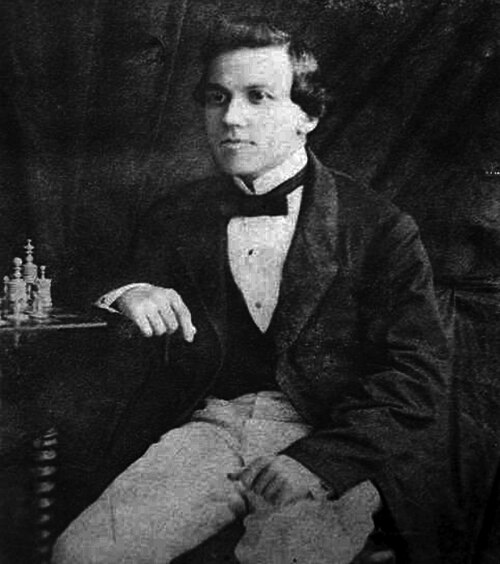
Paul Morphy
A New Orleans prodigy who crossed the Atlantic in 1858 and dismantled every master Europe could put in front of him — often giving odds, sometimes blindfolded, always with a clarity of development nobody had seen before. He effectively retired from serious chess at twenty-two, having run out of opponents.
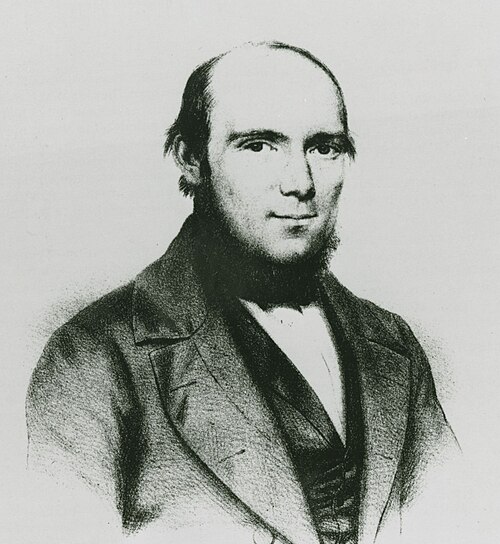
Adolf Anderssen
A Breslau mathematics teacher who became the strongest player of the Romantic era, winning London 1851 — the first international tournament in history. His two most famous casual games, the Immortal and the Evergreen, are still the textbook definition of sacrificial attack.
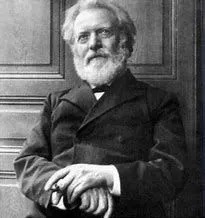
Philipp Meitner
A Viennese lawyer and master remembered above all for one game: the Immortal Draw of 1872, in which his king marches voluntarily into the heart of the enemy army and survives by perpetual check. The most famous draw in chess history — proof that a half point can outlive a thousand wins.
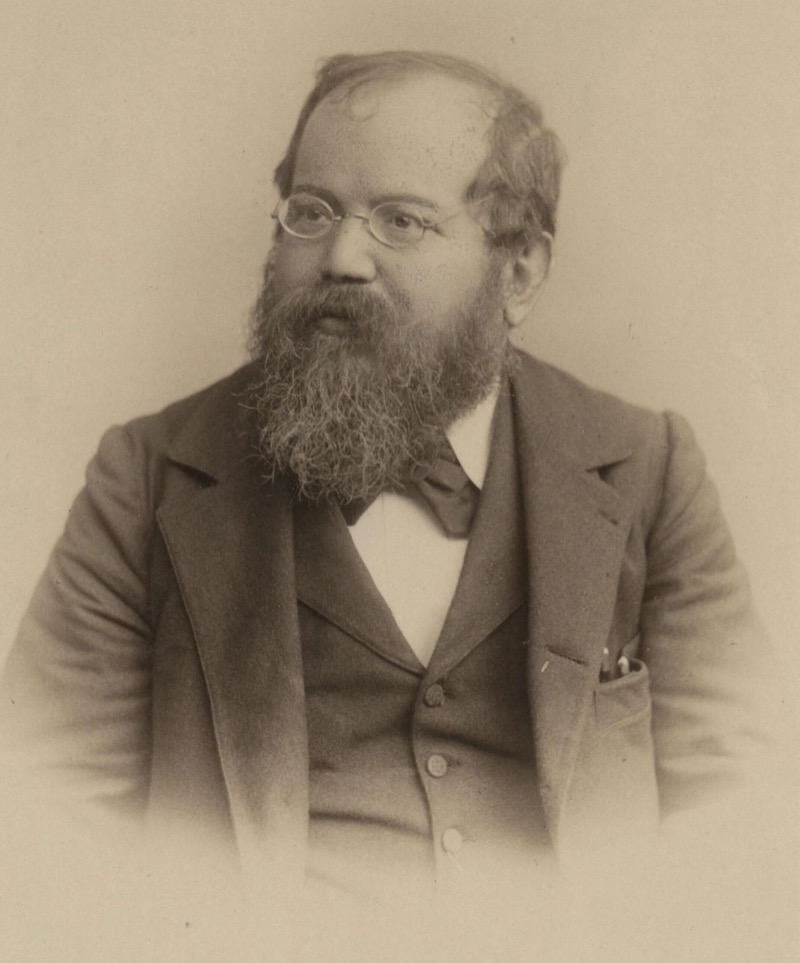
Wilhelm Steinitz
The first official World Champion and the father of positional chess — the man who turned romantic slugging into a science. At Hastings 1895, fifty-nine years old and already dethroned, he produced a combination so complete that his opponent chose to leave the building rather than resign to it.
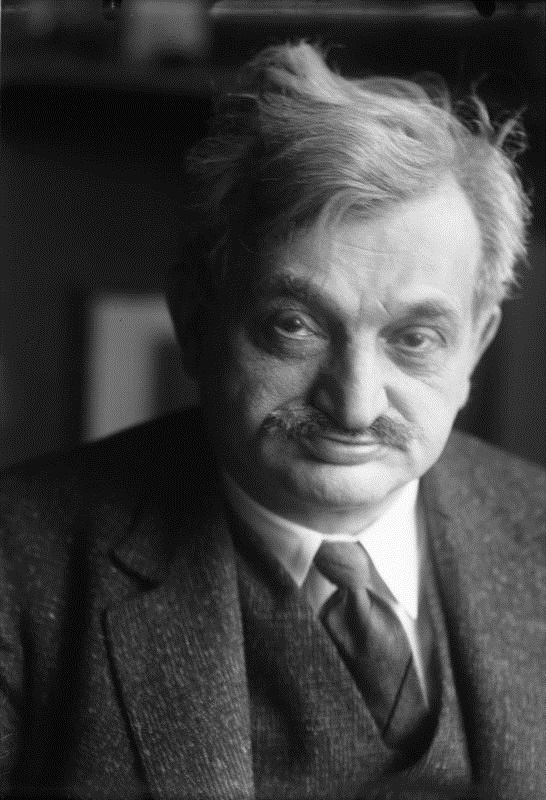
Emanuel Lasker
A mathematician and philosopher who held the world title for twenty-seven years — still the longest reign in chess history. At twenty he unleashed the double bishop sacrifice against Bauer in Amsterdam; the pattern has carried his name, and won games for attackers, ever since.
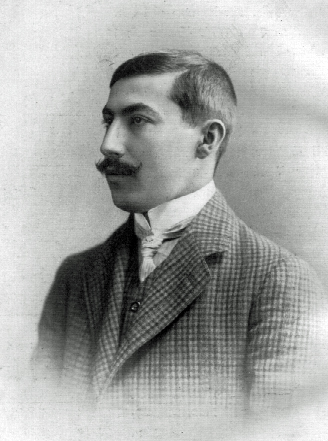
Akiba Rubinstein
A Polish master whose rook endgames are still taught as scripture, and whose 1912 — four major tournament wins in a single year — may be the best year anyone had before the modern era. The world-title match he earned never happened, and chess history has felt guilty about it ever since.
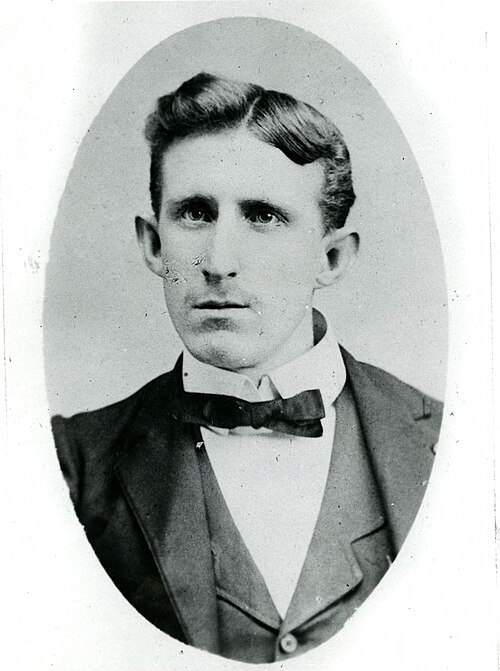
Frank Marshall
United States Champion for twenty-seven years, founder of the Marshall Chess Club, and the most dangerous attacking player of his generation. He was said to save his prepared surprises for years — and the gambit that bears his name is still feared in the Ruy Lopez a century later.
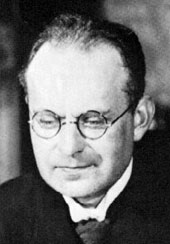
Aron Nimzowitsch
The Latvian-born author of My System, the most influential chess book ever written. He taught the world to blockade, to overprotect, to restrain before attacking — and in the Immortal Zugzwang Game he won by leaving his opponent, with the whole army on the board, no move that didn’t lose.
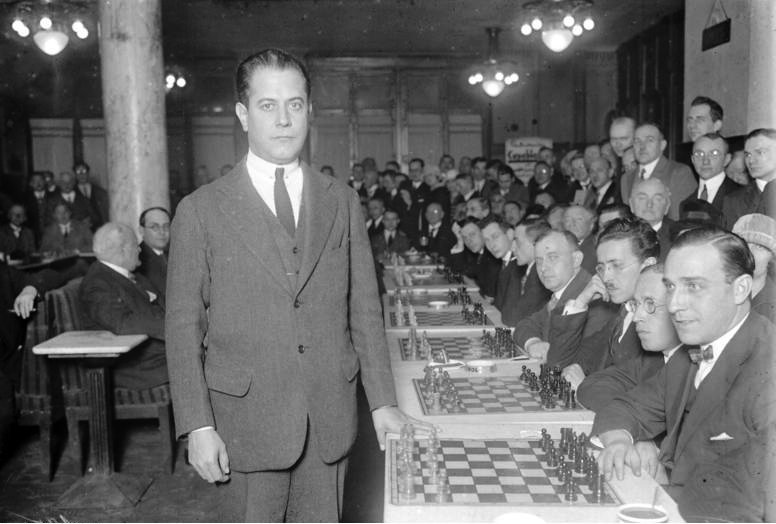
Jose Raul Capablanca
The Cuban World Champion who went eight years without losing a single serious game. His play was so clean that contemporaries suspected he simply never miscalculated — and when Marshall ambushed him with years of secret home preparation, he walked into it on purpose and refuted it at the board.
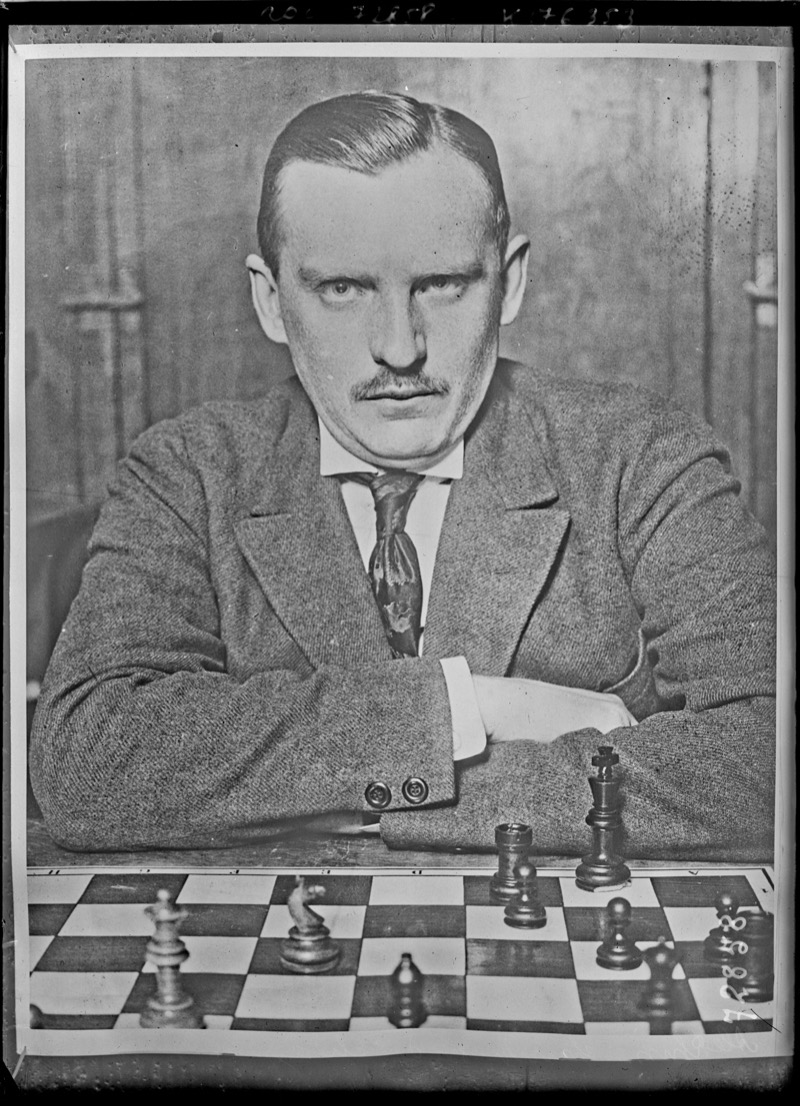
Alexander Alekhine
The fourth World Champion and the only one to die holding the title — a player whose combinations began a dozen moves before anyone else could see them coming. His win over Reti at Baden-Baden 1925 is still taught as perhaps the deepest combination ever played across a board.
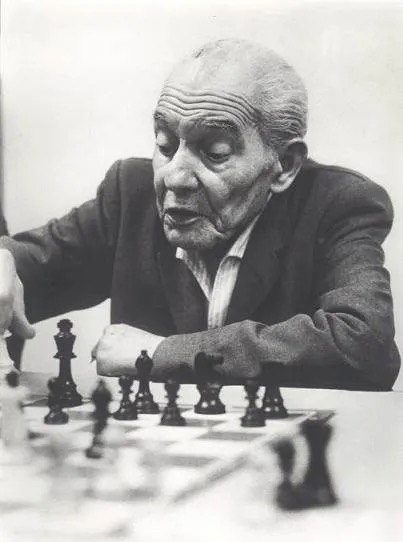
Esteban Canal
A Peruvian grandmaster who spent his career in the cafés and tournament halls of Europe. In a 1934 simultaneous exhibition in Budapest he sacrificed both rooks and his queen for a mate with his two remaining minor pieces — the Peruvian Immortal. FIDE made him an honorary grandmaster at eighty, still at the board.
Miguel Najdorf
The Polish-Argentine legend whose name lives on in the most popular opening variation in chess. As a young man in Warsaw he played the Polish Immortal, sacrificing four pieces for a mate delivered by pawn and knight; later, stranded in Buenos Aires by the war, he became the beloved elder statesman of South American chess.
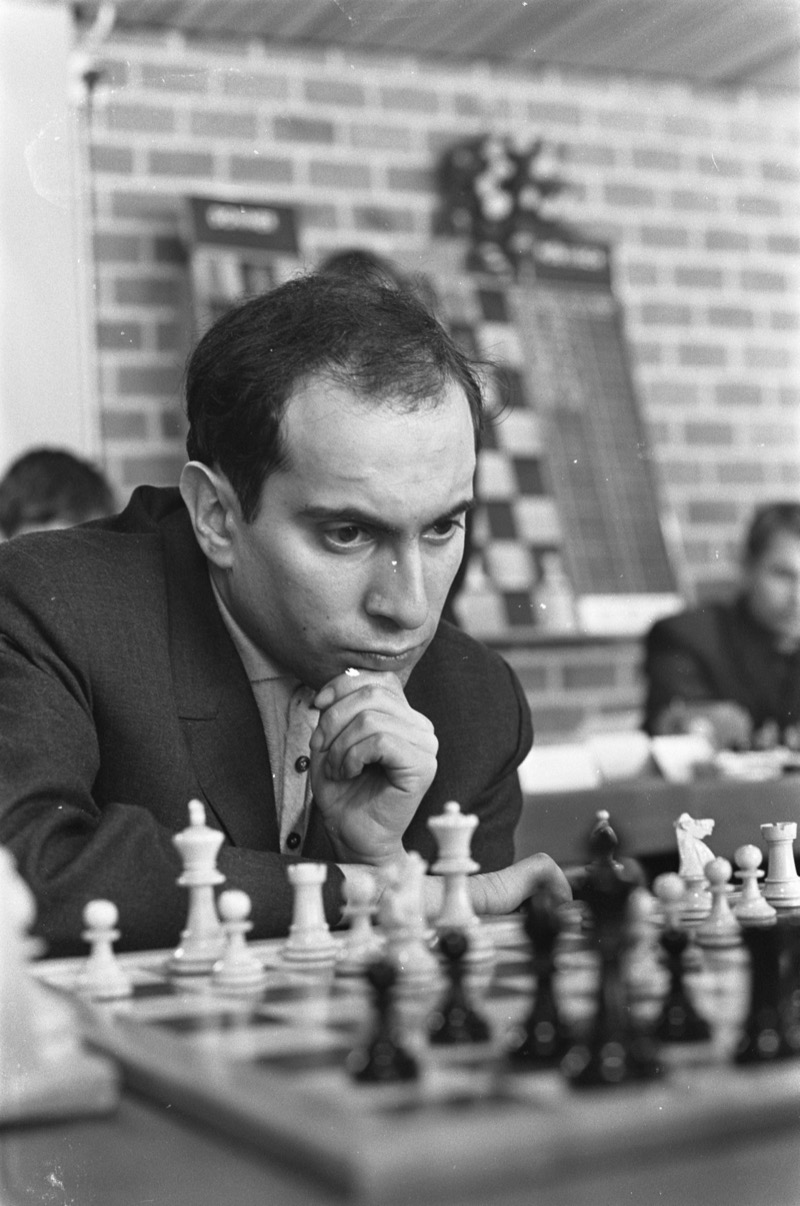
Mikhail Tal
The most beloved attacker who ever lived — a champion who sacrificed pieces not because the sacrifices were sound, but because nobody could refute chaos with a clock ticking. In his own words: "There are two types of sacrifices — correct ones, and mine." At twenty-three he took the crown from Botvinnik himself.
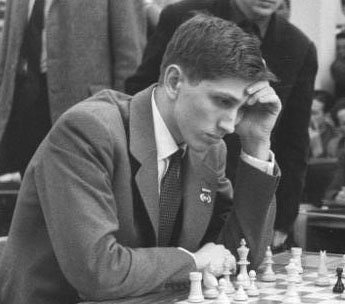
Bobby Fischer
At thirteen he played the Game of the Century; at twenty-nine he broke a quarter-century of Soviet dominance to become World Champion in Reykjavik, 1972 — along the way winning twenty consecutive games against the strongest players alive. His precision made brilliance look inevitable.
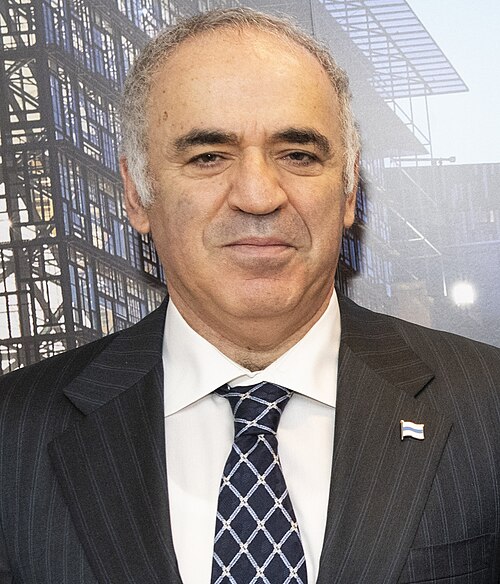
Garry Kasparov
The youngest World Champion in history at twenty-two, world number one for nearly two decades, and the most feared attacking calculator the game has produced. His 1999 win over Topalov at Wijk aan Zee is routinely called the greatest game ever played — and in that same year he beat the combined vote of fifty thousand players as "the World."
Deep Blue
An IBM supercomputer evaluating two hundred million positions per second. In Philadelphia, 1996, it became the first machine ever to beat a reigning World Champion in a classical game — the moment the machines arrived. Kasparov won that match; the rematch, a year later, went the other way.
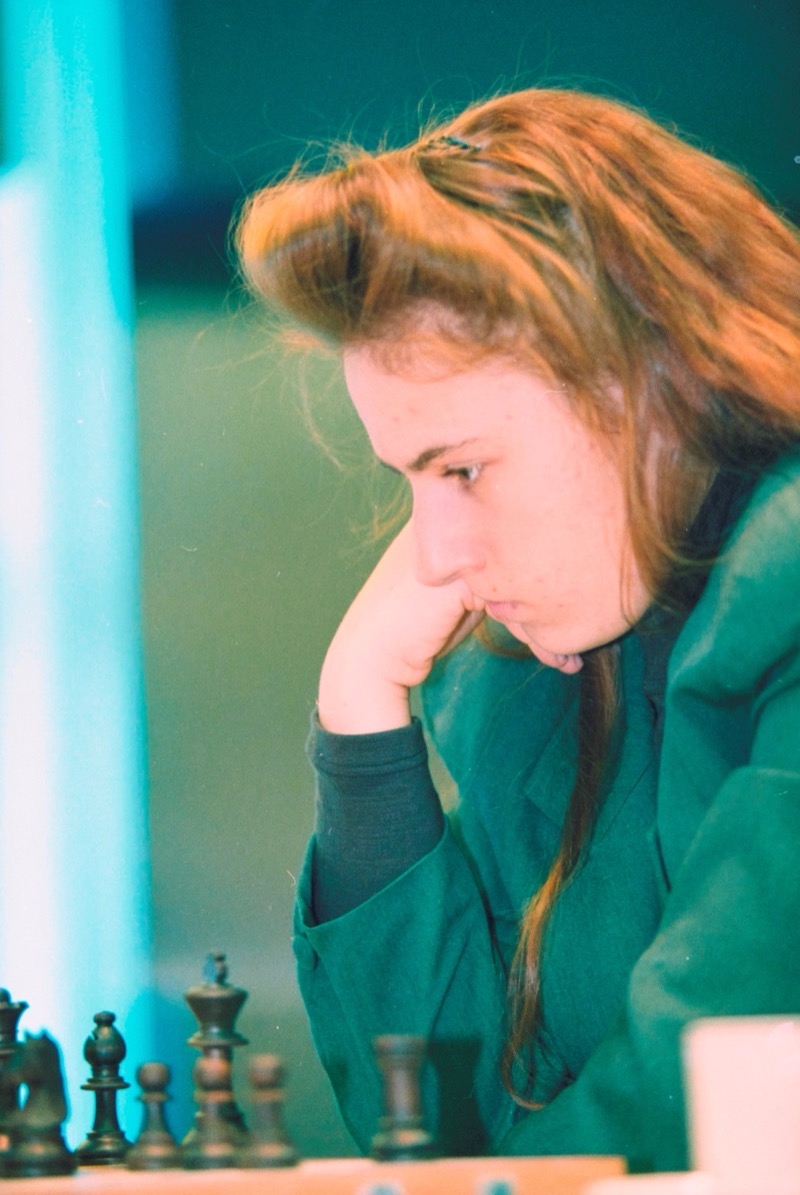
Judit Polgar
The strongest female player in history by every measure — a top-ten grandmaster who refused women-only titles and beat eleven world champions over the board. In Moscow 2002 she defeated Kasparov, the world number one who had once said chess was not for women. Grandmaster at fifteen, breaking Bobby Fischer's record.
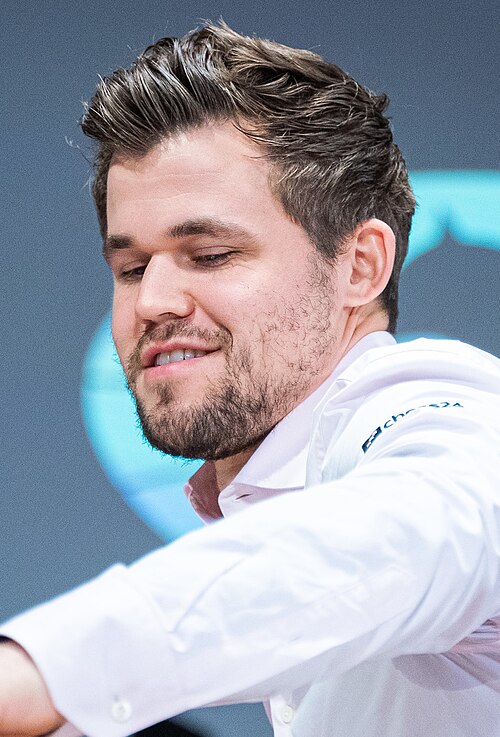
Magnus Carlsen
Five-time World Champion, holder of the highest rating ever recorded (2882), and author of a 125-game unbeaten streak in classical chess. His signature weapon is not the sacrifice but the squeeze: equal positions ground into wins over six hours — including the longest world championship game ever played.